Rotator Cuff-Related Shoulder Pain
A summary of rotator cuff-related syndromes like rotator cuff impingement, subacromial impingement, and subacromial bursitis, and what can be done to help them.
Dr Peter Weil (GP), Claire Weil (RN)
3 min read
Shoulder pain is common and frustrating. One frequent cause is rotator cuff-related shoulder pain, which includes what some doctors used to call subacromial impingement or rotator cuff impingement.
These terms all describe pain from the tendons and soft tissues around the rotator cuff — the muscles and tendons that help your shoulder lift and rotate your arm.
This brief guide explains:
What causes this shoulder pain
The options to treat it
How steroid injections can help — including how often they work and when they don't
What Is Rotator Cuff-Related Shoulder Pain?
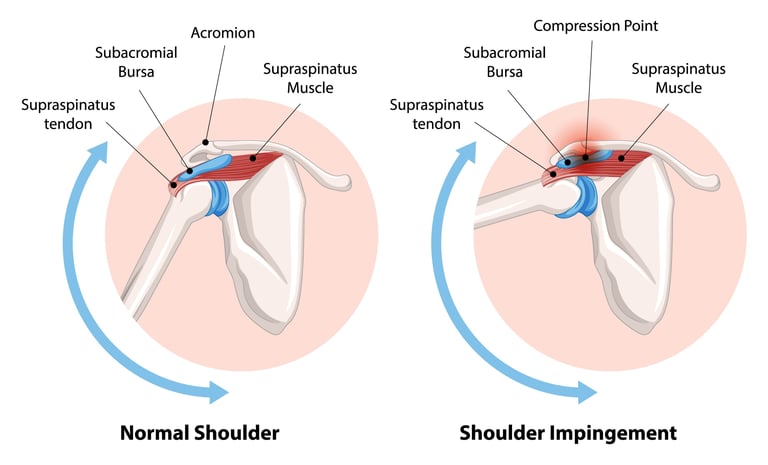
The rotator cuff sits under a bony roof near the top of your shoulder (the acromion). When the tendons and the small fluid-filled cushion (bursa) are irritated or overloaded, this can cause pain — especially when you lift your arm up or out to the side.
Common symptoms are:
Pain when lifting your arm
Pain at night, especially when lying on the sore side
Pain between about 60 and 120 degrees of arm lift
Feeling weak or stiff in the shoulder
Doctors now use rotator cuff–related shoulder pain to describe this condition because it reflects the range of problems that can occur, rather than one single "pinch." This approach helps guide more effective treatment.
How Is It Diagnosed?
Diagnosis starts with talking about your symptoms and a physical exam. Your clinician may move your shoulder in different ways to see which motions cause pain. There are typical patterns that are found during examination that are helpful. Sometimes imaging such as ultrasound or MRI is used to check for tendon tears or other structural problems.
What Are the Main Treatments?
1. Physiotherapy and Exercises - Exercises to strengthen shoulder muscles and improve posture are the main treatment and help most people feel better over time.
2. Activity Changes and Pain Relief - Reducing activities that make pain worse and using pain-relief medicines (like NSAIDs) can help while tissues settle. These medicines don't fix the underlying problem, but they can reduce symptoms.
3. Steroid (Corticosteroid) Injections - Steroid injections are used when pain is limiting daily tasks or stopping you from taking part in physiotherapy fully.
4. Surgery - Most people do not need surgery. Surgery is usually only considered if pain and weakness persist despite good physiotherapy and other treatments, or there is a confirmed large tear that affects function. Even then, steroid injections and physiotherapy are usually tried first.
How Steroid Injections Can Help
A steroid, sometimes combined with a local anaesthetic, is placed into the space above the rotator cuff. Doctors use anatomical landmarks (feeling bones and muscles) to place the needle where it is most likely to reach the irritated area.
Steroids reduce inflammation around the tendon and bursa. Many people get short-term pain relief, which can allow them to do exercises that help long-term.
Research shows that steroid injections rarely fix the problem on their own, but they can help for a period of time. This time can be key in helping patients manage pain, engage with physiotherapy, and improve quality of life.
Typically, the benefits are most pronounced between between 4 and 8 weeks after injection. The effect tends to wear off by the 3 month mark, which means that a key time for physiotherapy is in the first few months after an injection. From the research, the success rate of steroid injections for these problems is thought to be around 60%.
In short, these data mean that for many patients, steroid injections can reduce pain for weeks or a few months, but they don't fix the underlying tendon problem, and they don't work for everyone.
What to Expect After a Steroid Injection
After an injection:
You may get relief within a few days
Maximum relief often occurs around 4–8 weeks
Relief may last a few weeks to a few months
Physiotherapy is usually recommended to support recovery
Summary
Rotator cuff–related shoulder pain means pain from the tendons and soft tissues of the rotator cuff.
Physiotherapy and exercises are the main, long-term treatment.
Steroid injections can help reduce pain for some people in the short term, especially when pain limits exercise.
Many people improve short term, but injections do not cure the condition. Injections should be used as part of a broader treatment plan.
If you are struggling with symptoms of shoulder pain, you can contact us to discuss your needs, or book in directly for a consultation.
References
Buchbinder R, Green S, Youd JM. Corticosteroid injections for shoulder pain. Cochrane Database of Systematic Reviews. 2003;Issue 1:CD004016.
Lewis JS. Rotator cuff related shoulder pain: assessment, management and uncertainties. Manual Therapy. 2016;23:57-68.
Mohamadi A, Chan JJ, Claessen FM, et al. Corticosteroid injections give small and transient pain relief in rotator cuff tendinosis: a meta-analysis. Clinical Orthopaedics and Related Research. 2017;475(1):232-243.
Contreras F, Brown HC, Marx RG. Predictors of success of corticosteroid injection for rotator cuff disease. HSS Journal. 2013;9(1):2-5.
American Academy of Orthopaedic Surgeons. Management of Rotator Cuff Injuries: Evidence-Based Clinical Practice Guideline. Published August 18, 2025.
This information is for educational purposes only and is not a substitute for professional medical advice, diagnosis, or treatment. Always seek the advice of your health provider with any questions you may have regarding a medical condition.
Privacy and GDPR Policy | Terms and Conditions for Website Use & Cookies
Dr. Peter Weil, MBChB, BSc, MRCGP (2007).
Registered with the Information Commissioners Office - ZB780390